The horror movie fandom has always been a big tent. But lately, that tent seems to be turning on itself — at least if you believe the internet, Twitter and TikTok streams out there.
Back in the old days, one could say people who loved horror would watch anything from Hitchcock and Frankenstein, to old black-and-whites, all the way to Freddy, Jason and Michael. Even the Saw movies had their impact. Horror was horror. You could like one corner of it, hate another corner of it, and still somehow all fit under the same tent.
But now, it would appear that there’s a generational divide that took place somewhere along the way. There’s an offshoot of horror fans who have gone the obsession route and are beginning to potentially lecture older fans about their choices.
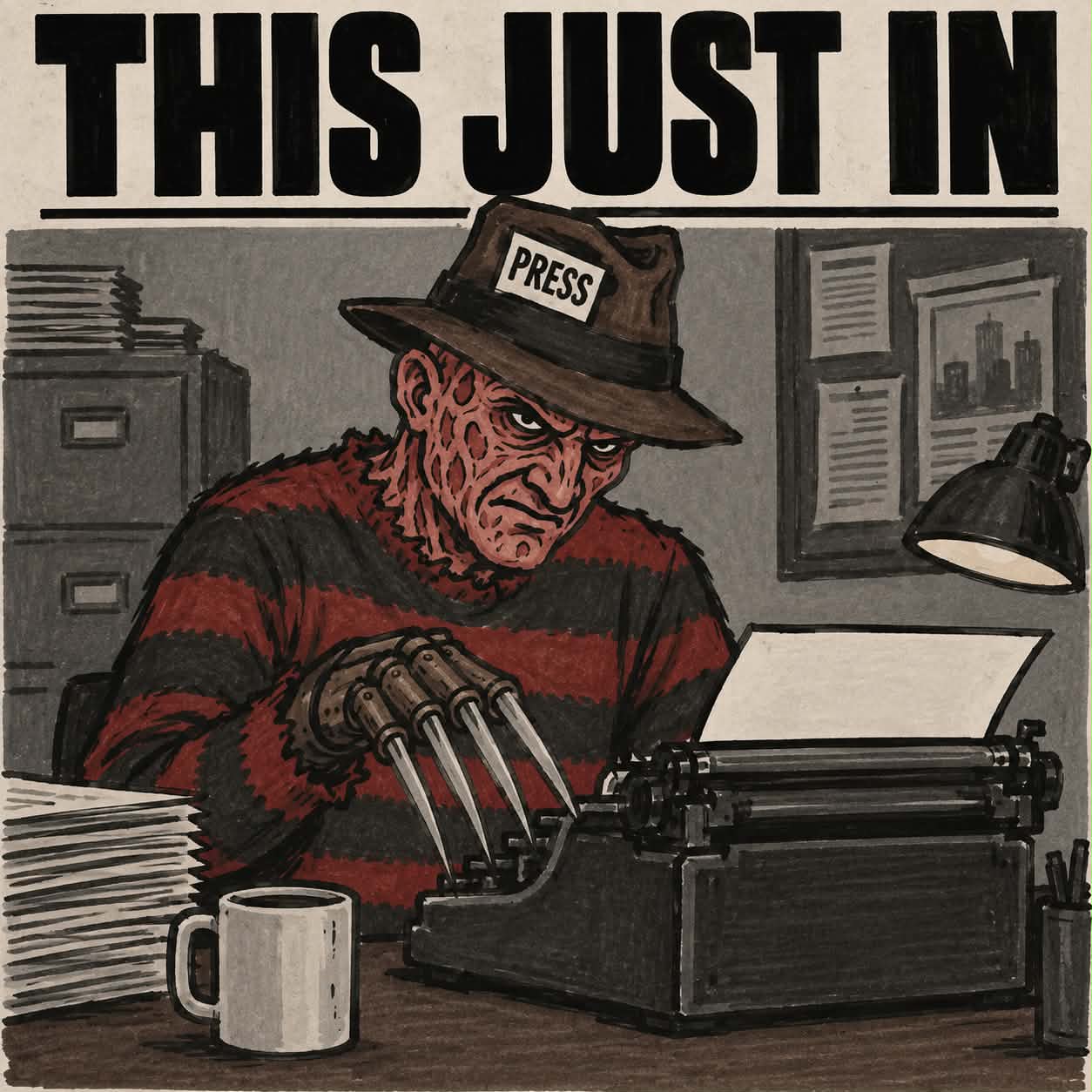
One of the biggest examples is Freddy Krueger.
You see, there have been a lot of videos lately about how Freddy was a child murderer and, because of that, the entire 1980s celebration of him — blanketing him everywhere with the exception, perhaps, of cereal boxes for kids — was questionably immoral, distasteful and wrong.
Anyone who lived through the ‘80s or ’90s can remember Freddy was definitely everywhere. Along with ALF and Ronald Reagan, the guy was a pop-cultural phenomenon. There were products, posters, toys, video games, board games and just about everything else you could find.
Was evil being marketed to kids?
Maybe.
And kids were eating it up.
But horror fans for a long time didn’t question that because horror fans understood something pretty basic: Freddy Krueger wasn’t real.
They knew the backstory. They knew why Freddy got burned. They knew exactly what kind of monster the character was supposed to be.
But they also knew it was fiction.
And that’s the big deal here.
It was fiction.
Now it sometimes feels as though we’re blurring fiction and reality together so much that people are treating the Freddy backstory almost as though it actually happened, and then getting angry at 40-plus-year-old horror fans who may have dressed as Freddy for Halloween, owned a Freddy poster or had a couple of action figures.
Let’s take Jason, too.
Jason Voorhees was a deformed child who drowned at Camp Crystal Lake while counselors who were supposed to be watching him weren’t paying attention. There’s our origin story. There’s the tragedy that eventually gives us the horror icon.
But rumors and speculation surrounding newer incarnations of Friday the 13th have also brought arguments over Jason’s appearance and whether his deformities should still be depicted the way they traditionally have been. Is that because people find it offensive now? Is it simply a creative decision? Is it an attempt to avoid controversy?
Whatever the reason, even that becomes another debate.
Horror and pop culture have always tied together remarkably well. As a matter of fact, if you look at the horror movies of a particular time in history, you can get a pretty good gauge of what pop culture — and society itself — was doing at the time.
The ’80s were wild, people, and I think Freddy shows that.
The ’70s were brutal, cynical and increasingly distrustful, and the horror films that came out of that period reflected it.
And horror has always had messages underneath the blood.
George Romero didn’t simply make movies about zombies. His films became commentaries on society, consumerism, class and race — sometimes intentionally and sometimes because audiences found meanings in them that even Romero said he hadn’t originally planned.
So yes, horror has always lectured us a little bit, too.
But it usually did it through the story.
Now it seems like a newer part of the fandom wants to lecture the audience and question people who liked certain things before, using the modern lens of today to judge what somebody enjoyed 30 or 40 years ago.
And that’s so often what alienates people from each other.
Judging the past entirely through the modern lens of today just doesn’t work very well, because here’s something we sometimes forget:
The modern lens of 25 years from now will judge this era, too.
And perhaps not too fondly.
The big tent of horror fandom seems frayed. Maybe there have been a few too many stab wounds in the tent and too much air got in, or too much warmth got out. But there’s definitely a divisive tone among fans of several movies and franchises, along with this need to use a particular film of choice to lecture someone else about why their film of choice is wrong.
It’s not just horror, of course.
It’s happening throughout pop culture, social media and politics, and perhaps that same thing is simply bleeding over — no pun intended — into the horror genre.
And maybe some of it is good, at least to a degree.
Maybe it is good that a modern society stops for a second and ponders why a fictional child murderer became a pop-culture celebrity for an entire decade. That’s actually an interesting conversation to have.
But I have a theory as to why Freddy became so popular, and perhaps the fandom can agree on this one.
The Freddy remake was terrible.
And perhaps any future Freddy remake will be equally terrible, because the reason Freddy was popular — the reason the whole thing worked — was Robert Englund himself.
If he didn’t play Freddy, it just wasn’t the same.
It’s as simple as that, folks.
We weren’t laughing at Freddy, quoting Freddy and buying Freddy merchandise because we were celebrating a child killer. We were celebrating a fictional character, an outrageous horror creation and, most importantly, the actor who brought that character to life.
Because horror is fiction.
At least we hope it is.
Because when horror becomes real life?
Well, I guess that’s a discussion for the true-crime fandom.
They can handle that one.