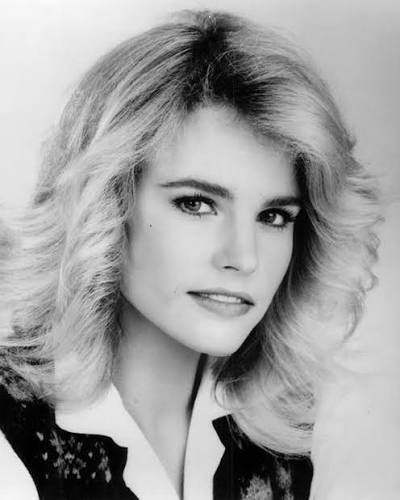
We learned some unfortunate news today as actress Jennifer Runyon has passed away at the age of 65. While her family did not disclose the exact cause of death, they shared that she was surrounded by love and family at the end after what they described as an arduous ordeal.
Runyon appeared in the 1984 blockbuster Ghostbusters in the memorable psychokinesis experiment scene, one of those small but recognizable moments that fans of the film still remember today. She built a steady career throughout the 1980s and early 1990s and became a familiar face across television and film during that era.
She had a lead role as Gwendolyn Pierce on the fan favorite sitcom Charles in Charge and also appeared on the soap opera Another World. Her television credits extended to appearances on series such as Quantum Leap and Murder, She Wrote, making her one of those actresses many viewers instantly recognized even if they did not always know her name.
For horror fans, Runyon also had roots in the genre, getting her start in the early 1980s slasher film To All a Goodnight. It was a modest beginning that helped launch a career that would stretch across multiple genres during one of television’s most recognizable decades.
Yet another star gone too soon, and one that many fans grew up watching across television screens throughout the 80s and 90s. May she rest in peace.
Sometimes a movie just sort of appears out of nowhere and you realize Hollywood expected it to be a big deal, but the audience never really got the memo.
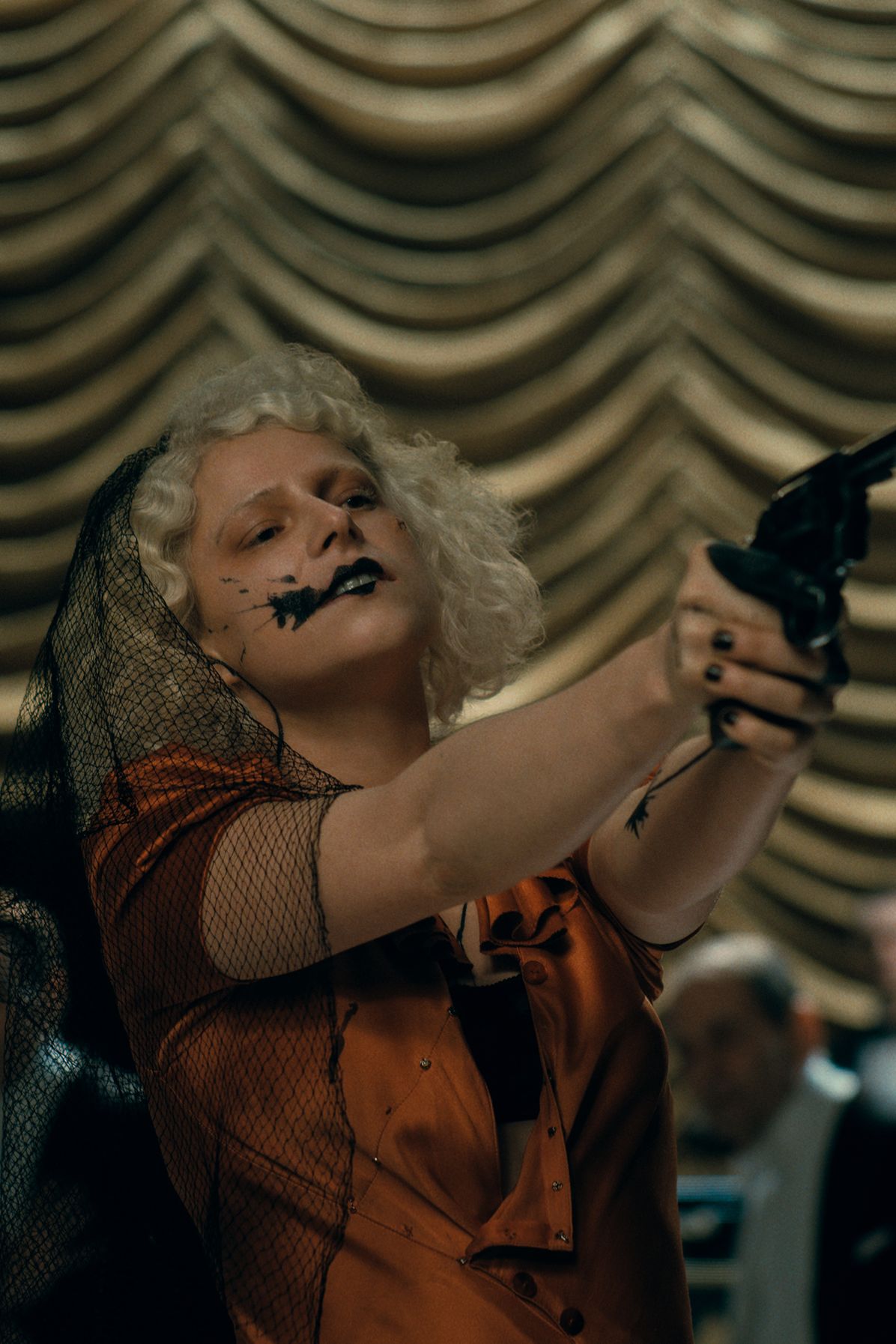
That seems to be what happened with The Bride!, the new Frankenstein-inspired film directed by Maggie Gyllenhaal. On paper, the movie had some things going for it. The Gyllenhaal name carries weight in Hollywood, the source material comes from one of the most famous monster stories ever created, and studios have been trying for years to find a way to revive the old Universal-style monster movies for modern audiences. But when the film actually arrived in theaters this weekend, the numbers told a very different story.
The film opened to roughly $7.3 million domestically, with another $6.3 million internationally, bringing its global opening weekend to around $13.6 million worldwide. That would be fine for a small horror movie, but The Bride! reportedly cost somewhere in the neighborhood of $80 to $90 million to produce, which suddenly makes that opening weekend look extremely rough.
What makes the situation even more interesting is that many people, including horror fans, seemed genuinely confused about what the movie actually was. The trailers presented it as a strange mix of gothic horror, romance, and what almost looked like an art-house style period piece. That might work for a smaller experimental film, but it is a harder sell when you are spending blockbuster-level money.
The marketing also did not seem to find its audience. Personally, I only saw a few ads for it, and even then it was not clear what niche the film was trying to target. Was it meant to be a serious monster movie, a dark romantic drama, or a stylized reinterpretation of the classic Bride of Frankenstein story? The messaging never quite landed.
To make matters worse, the movie opened against more broadly appealing releases, including a major animated film that dominated the weekend box office. That kind of competition is always risky, but it becomes even more dangerous when the film you are releasing already has a somewhat unclear identity.
In the end, The Bride! might become one of those films that finds a second life later on streaming, where audiences sometimes embrace unusual projects that struggled in theaters. But at least for now, the opening weekend suggests this was a big-budget gamble on a very niche idea, and it is one that did not quite connect with audiences the way the studio probably hoped.
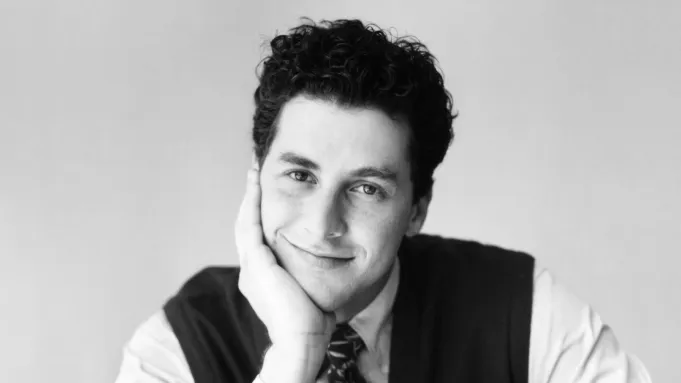
“I am writing to you, Corey, here, directly, because this is how I… we… keep you with us. I have known and loved you for the past 45 years, since our E.S.T days in NY as hungry wild artists. You were a massive part of my creative work, my creative family, for decades. It meant everything full circle when you joined our BGB community as a teacher, and we navigated the work together, all of us, always coming back to the truth and the potential of storytelling, of the actor’s endless power. You kept us all honest and brave and about art.”
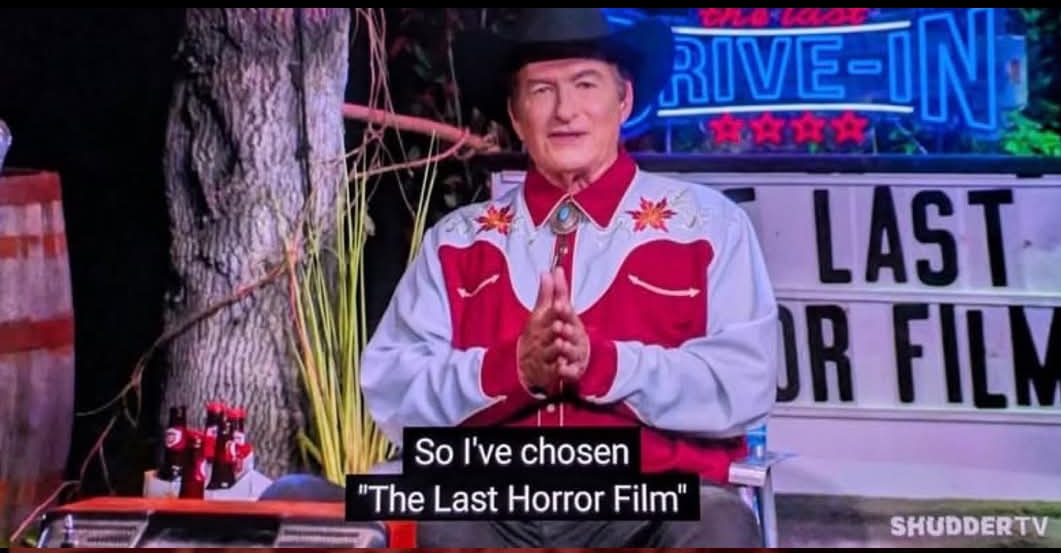
For many horror fans, Shudder and Joe Bob Briggs have almost become synonymous over the past several years. Since “The Last Drive-In with Joe Bob Briggs” launched in 2018 as a one-night marathon event, it quickly grew into the platform’s flagship program, hosting hundreds of cult and horror films and building a fiercely loyal fanbase along the way.
That’s why the recent announcement that the show’s regular run has come to an end caught many viewers completely off guard. While Shudder has confirmed that Joe Bob will return for several special events throughout the year, the traditional season format that fans have grown used to is apparently finished.
The surprise nature of the announcement has led to some frustration among fans online. Many subscribers have openly admitted that Joe Bob’s show was the primary reason they signed up for Shudder in the first place, and for them the end of the regular series feels like losing the platform’s main attraction. As a result, social media and horror forums have filled with people claiming they plan to cancel their subscriptions, believing that Shudder made the decision to cancel the program rather than simply restructure it.
At the moment, there’s no official confirmation of any behind-the-scenes conflict or controversy. The most likely explanation appears to be that the show is transitioning into a special-event format, something that would allow Shudder to continue featuring Joe Bob while reducing the cost and complexity of producing full seasons built around licensing dozens of films.
Still, the lack of a clear explanation has left plenty of room for speculation, and horror fans tend to be very protective of the things they love. Joe Bob is one of the most quintessential characters in modern horror and he’s been around for a long time.
Clearly fans took to him years ago and continue to do so, and if the ship goes down they’ll go with it.
The UK Daily Mail splashing a headline that the Trump Administration is blocking and bulletin to local law enforcement about terrorism resulting from the war in Iran.
The reports indicate that the bulletin reason part, “Radicalized individuals with a variety of ideological backgrounds also may see this conflict or other geopolitical events as a justification for violence,’ the report continues.
The five-page bulletin blocked by the White House provides specific details on how Iranian proxies may carry out attacks across the country. One section explains how local law enforcement can respond to this type of violence.
The official title is ‘A Public Safety Awareness Report: Elevated threat in the United States during US-Iran conflict’.
Homeland Security broke protocol and gave the White House a heads-up about the nationwide bulletin hours before it was set to be
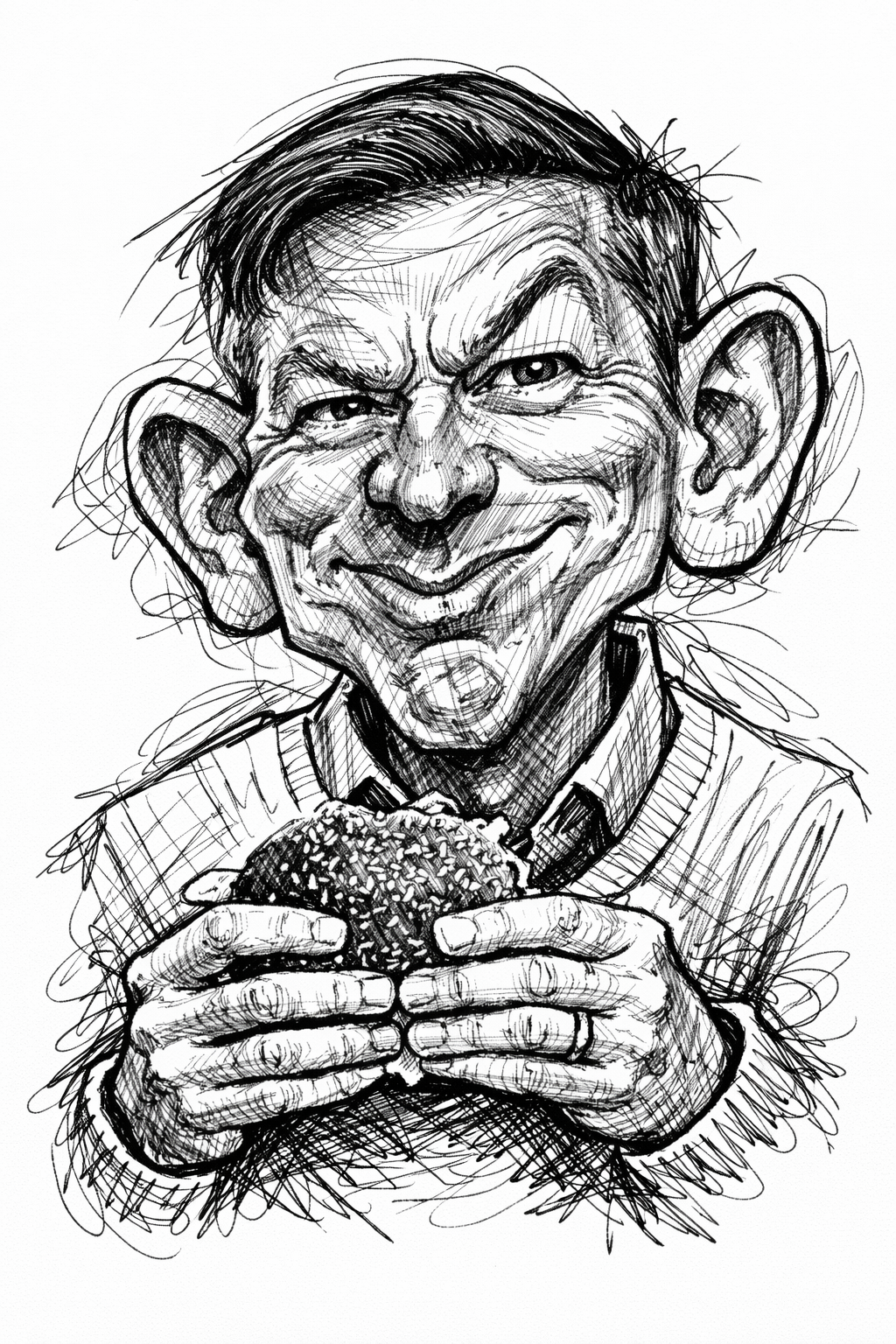
Everyone makes jokes about things that are not in their bingo cards for the year, and for all of us, the bingo card did not have fast-food CEOs going on TikTok to take videos of themselves eating their “products.” Not their food, but their products.
It’s been a week of people mocking and generating memes about the McDonald’s CEO for deciding to make a promotional video for the new Golden Arch sandwich. He awkwardly was on social media taking what was considered by most as a pitifully small bite and being overwhelmed by what he thought was the size of the burger that had sesame seeds—something he was shocked at the inventiveness of.
The CEO in question is Chris Kempczinski, who has run McDonald’s since 2019. The promotional clip that circulated online quickly drew ridicule across TikTok and other platforms, with viewers pointing out how awkward the moment felt.
The bite itself became the focus of thousands of reactions, memes, and stitched videos, with people questioning whether the CEO actually eats the company’s food regularly. Instead of creating excitement around the sandwich, the clip seemed to spark a wave of parody content that spread across social media for days. But he loved those crispy onions..
A separate video of him eating a chicken sandwich has people joking that he was actually putting the napkin up to his mouth in order to spit it out.
After the video was widely mocked, Burger King, Wendy’s, and Taco Bell—and everyone else in between—went online to do similar videos but, because of the other response, took larger bites of the product. And that was the week. That was a week of social media, at least. People making mixes of the video, songs about the video, re-videoing the video, commenting on the video, all at the expense of the McDonald’s CEO.
Listen, anyone who follows conspiracy theories will know one of the most common conspiracy theories that has been active online recently is this thought—albeit gross—that fast-food joints don’t have enough cows to use in their products and are getting medical waste and other forms of ingredients that are less than edible.
It all seems silly and far-fetched until, of course, you see the CEO slam his teeth into a very small portion of a product that he won’t call food and promote that on social media.
The news keeps getting better about this film we already know it’s a complete reimagining and now we’re hearing about more stars some of the names you’ll know. ..
Per Deadline, joining The Exorcist are 11 members of the so-called Flanafamily, including Rahul Kohli, Hamish Linklater, Gil Bellows, Carl Lumbly, Robert Longstreet, Matt Biedel, Samantha Sloyan, Kate Siegel, John Gallagher Jr., Benjamin Pajak, and Carla Gugino, most of whom have appeared across myriad Flanagan projects from Midnight Mass to The Life of Chuck.
Flanagan’s Exorcist is confirmed to be an all-new story set in The Exorcist universe and is not a sequel to David Gordon Green’s ill-fated The Exorcist:Believer from 2023. According to The Hollywood Reporter, while plot details for The Exorcist are being kept under the sheets, it is known that Scarlett Johansson plays a mother and Jupe her son. Leguizamo may be playing an antagonist. No word yet on who anyone else will be playing
Let’s talk a bit about Mandela Effects, and specifically one strange Mandela Effect that I didn’t even know existed until tonight. I watched a video about how people say it existed, and once it became an issue in my mind, it started to bother me like it really did exist.
Let me explain.
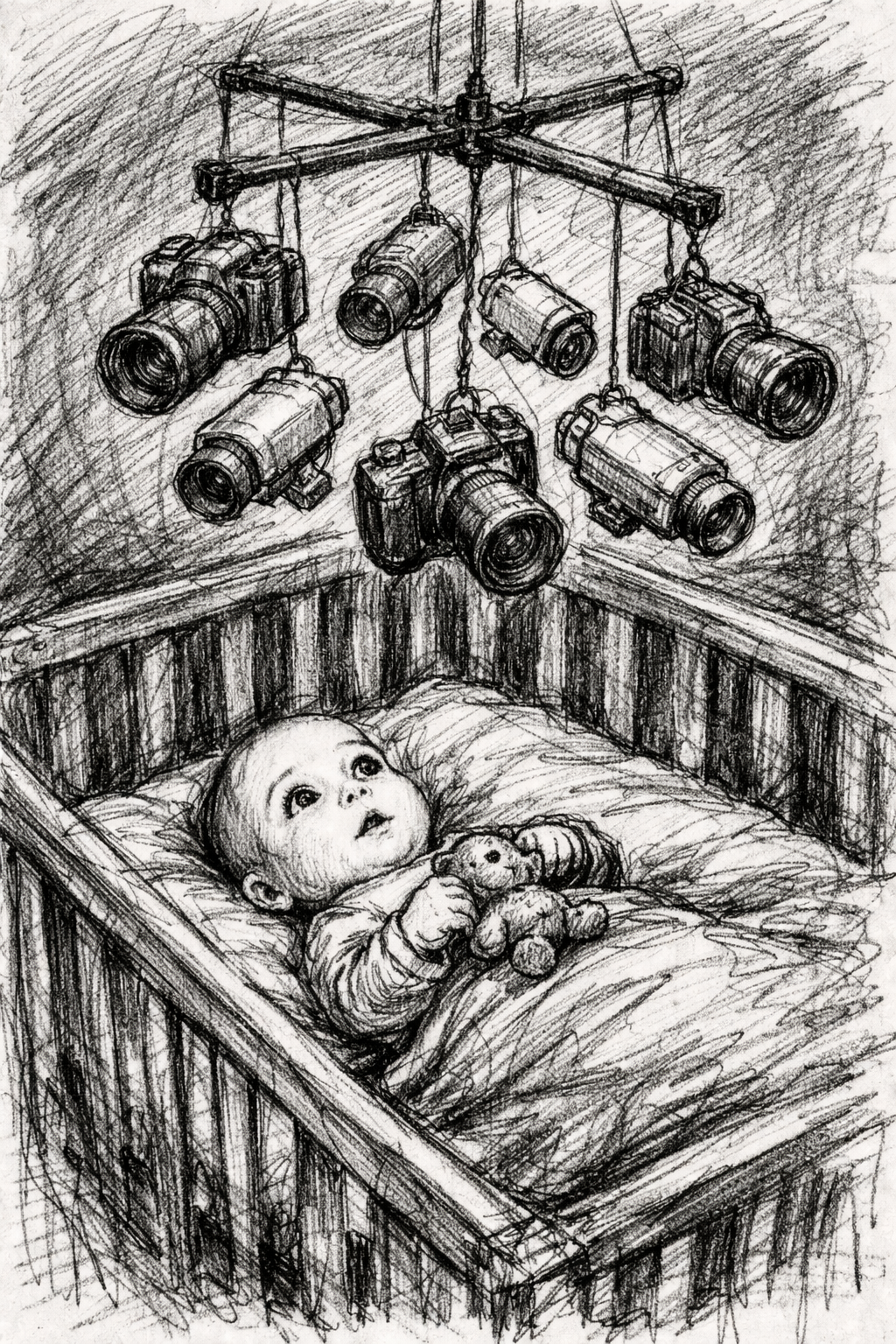
You know those things above baby cribs? You know the word—a mobile. We’ve always called it a mobile. It’s always been known as a mobile. People for generations have said it’s a mobile. As a society we can agree on that, right?
Until you don’t.
Here’s the catch: tons of Reddit forums and different threads across the internet talk about how people remember there being a different word than mobile. They remember it to the point where it’s on the tip of their tongue, and they believe the word was something else entirely. For me.. and believe me, there are some Mandela Effects I really can’t explain.. this one immediately felt fanciful and a bit silly. The word was always mobile. I don’t remember anything different.
Until I started thinking about how other people remember the word being different. Then I started to wonder if the word potentially was different, and maybe I’m the one who’s wrong. I nearly second-guessed my sanity. I started second-guessing the idea that the word was always mobile to the point where I was calling family members and asking friends what they thought the word was.
They all convincingly responded: mobile. But when you sit with this idea long enough—when you let it dwell and fester—your brain starts to play tricks on you. You begin to wonder if it really was mobile, or if the people remembering a different word they can’t quite recall are actually right.
I’m a big fan of the movie Pontypool. It’s one of my favorite zombie horror films, about a mild-mannered, somewhat egotistical radio host broadcasting in the middle of the night from a snowy town. I love that theme. But in the film, people in the town begin to get infected by a strange virus that spreads through language. Words stop meaning what they should, and people begin to lose their understanding of them. It’s kind of like that old Twilight Zone episode from the 1980s called “Wordplay.” The one where a man slowly goes nuts while the entire world starts using words in ways that make no sense to him.
There’s something about forgetting words that’s genuinely frightening.
Maybe it’s because if you’ve seen Alzheimer’s or dementia in your family, there’s a real horror in forgetting words and forgetting things. Forgetting so much that you eventually become a vessel that feels empty.. without the material that used to fill your mind.
But Pontypool is all about language breaking down. In that movie it’s a zombie virus, of course, you have to make it scary somehow.
But the idea of words changing their meaning, people losing vocabulary, or even losing language entirely… that really gets under my skin. And it probably does for you too.
It’s strange how something so benign and mundane can somehow still be so terrifying. And that’s what makes this Mandela Effect a little eerie.
It’s not the usual example like the Berenstain Bears, or the story about Sinbad supposedly making a genie movie that he now says never existed. Instead, this one is about the most basic words we’ve known since babyhood.
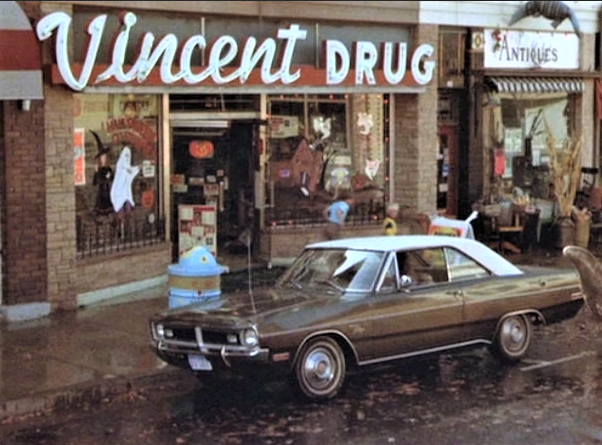
On Friday, August 21, 2026, I’ll be screening “H4” right next to the former Vincent Drug building featured in the film – at The Bambino restaurant on their outdoor patio, located directly beside Vincent Drug. The restaurant will be serving pizza and desserts all evening and as the sun goes down over Midvale, Halloween music will echo through the night… and The Shape returns!
This is the hottest nostalgic Halloween ticket of thr summer!
For years people who have taken the powerful psychedelic compound DMT have reported something that sounds more like science fiction than neuroscience: encounters with strange beings. Some describe mechanical elves, others report godlike entities or shadowy figures that seem aware of their presence.
A growing body of researchers is now taking these reports seriously—not necessarily because they believe the entities are real, but because the experiences are so consistent across thousands of users that scientists want to understand what’s happening inside the human mind.
One of the more ambitious ideas comes from neurobiologist Andrew Gallimore, who is exploring something called “extended DMT” (DMTx). Instead of the usual short but intense trip that lasts around 10 to 15 minutes, this method keeps people in the altered state longer through controlled infusion, giving researchers more time to study what participants see and experience. Gallimore has even proposed something he calls “SETI for the mind,” a concept where scientists might try to communicate with these perceived entities during the experience to see whether the encounters show signs of intelligence or are simply elaborate hallucinations created by the brain.
Not everyone in the scientific world is convinced, of course. Many researchers believe the human brain is wired to recognize faces and personalities, meaning psychedelics may simply scramble our perception enough that the mind invents characters to make sense of the chaos. Still, the phenomenon remains one of the strangest recurring elements in psychedelic research. Whether the entities are nothing more than neurological fireworks or something deeper tied to consciousness itself, the question remains fascinating—and just mysterious enough to keep people asking what exactly the mind is capable of seeing when the doors of perception are pushed wide open.