Heads Up: A Soviet-Era Spaceship Is About to Crash Back to Earth — Maybe Into Your Backyard
A derelict spacecraft launched by the former Soviet Union in 1972 is expected to re-enter Earth’s atmosphere this week — and it’s not your typical space junk. Unlike most debris that burns up in the atmosphere, this one might actually survive re-entry… and come crashing down in one piece.
Meet Cosmos 482, also known as Kosmos 482 by the Russians. Originally designed to land on Venus, this heavy-duty spacecraft was accidentally stranded in Earth’s orbit over 50 years ago. Now, it’s making its final descent — and it’s bringing all 1,091 pounds of reinforced Soviet engineering with it.
NASA forecasts that Cosmos 482 will re-enter Earth’s atmosphere sometime between May 7 and May 13, with the most likely crash date being May 10. And here’s the kicker: experts say it might not just burn up on the way down. This Venus lander was built to survive 300 Gs of acceleration and 100 atmospheres of pressure. Translation: it’s a flying tank — and it’s coming home.
So where will it land? Good question. The current projections are wide — it could hit anywhere from the United States, Mexico, South America, Africa, Europe… or yes, even your house. At this point, the best advice might be: don’t look up… unless you hear something coming.
Stay tuned — and maybe keep your insurance up to date.
We’ve all been pretty busy lately. In fact, we’ve been so busy, I don’t think we’ve even had the chance to really consume the news. There’s been shootings, controversial political decisions made by the Trump administration—and of course, we always talk about the weather. That’s the go-to, right?
But something else happened this week that barely anyone is talking about. Something huge. Something that could very well be the beginning of disclosure—at least the kind that says, “Hey, life itself might not be confined to just this planet.”
It’s out there in the constellation Leo, about 124 light-years from us, which in the grand scheme of the universe, isn’t as far as you’d think. What did they find? They detected chemicals in the atmosphere—dimethyl sulfide and dimethyl disulfide. On Earth, those are mostly made by little things like marine plankton. According to one of the lead researchers, this is maybe the strongest hint we’ve ever had that we’re not alone.
Of course, the scientists are careful; they say we need more proof before we start popping champagne, because there could be non-living ways those chemicals show up. But as it stands, this is about as close as we’ve come to actual scientific evidence for life beyond Earth.
That’s right—news broke that another planet, which isn’t as far as one might think in the scheme of things (though still light-years away, of course), may have the building blocks—or even the evidence—of life. And that’s thanks to the James Webb Telescope. Now we know that. But we also know this likely won’t be the last time we hear news like this. There’s a good chance it’s not just this one planet. This is just the first somewhat-official disclosure through scientific research, with potentially many more to come.
And yet… no one’s talking about it? I mean.. Us. People. The little people. The medium people. And the big people. . .
The story was a blip. Something tossed in after sports and weather. No real discussion about what it could mean, no deep dives into what it might tell us about the nature of life, or how we might even try to contact or reach these places someday. Instead, you have to dig to find it. Space nerd periodicals might carry the headline, but this should’ve been everywhere.
Now sure, it’s not aliens in flying saucers or cows mysteriously mutilated by little green men—but it is potential scientific confirmation that life may exist beyond Earth. That the universe could be teeming with life. That’s a big deal.
So look at us here on earth. Consider the circumstances.. a landscape so charred by disaster and controversy that we don’t even have spare time to wonder anymore… Imagine a giant sized version of us. Would it be the same as here?
Following that though, here’s the real question, if this is a big deal—if it turns out life really does exist on this Earth-like planet, and maybe many more: Do we even want to tell anyone WE are here?
Depending on the kind of civilizations that might exist on these planets, would it be better to just keep our little pale blue dot a secret, hidden in this quiet corner of the Milky Way?
Their bravery.. their singing.. they united the world.
Actually they may have. People thought their response, and Katy Perry kissing the earth, was tone deaf. But the rest of us? Yea.. we just don’t know if this even happened.
And the door?
It opened.
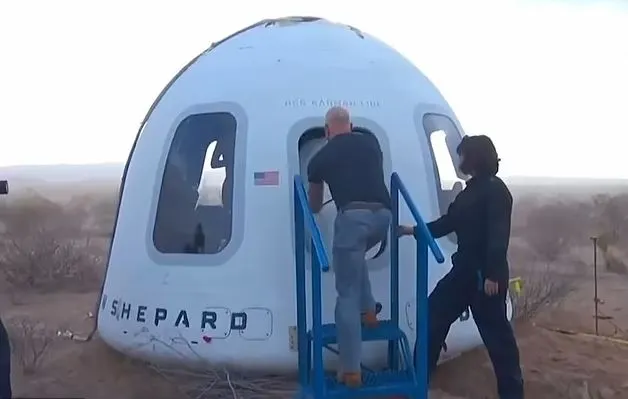
We saw it.. We know it.. And Jeff Bezos doing his fake heroic door open was just for show.
This premature door open occurred after six women including Katy Perry and Jeff Bezos’ fiancée Lauren Sanchez – traveled just beyond the edge of space aboard Blue Origin’s reusable New Shepard rocket, before the capsule parachuted back to Earth.
I went outdoors last night. It just so happened to be one of those nights where sleep just wouldn’t come. I’m not sure why—I woke up from a dream in a panic, but I couldn’t remember the dream itself. Just an uneasy feeling lingered throughout the early part of the evening.
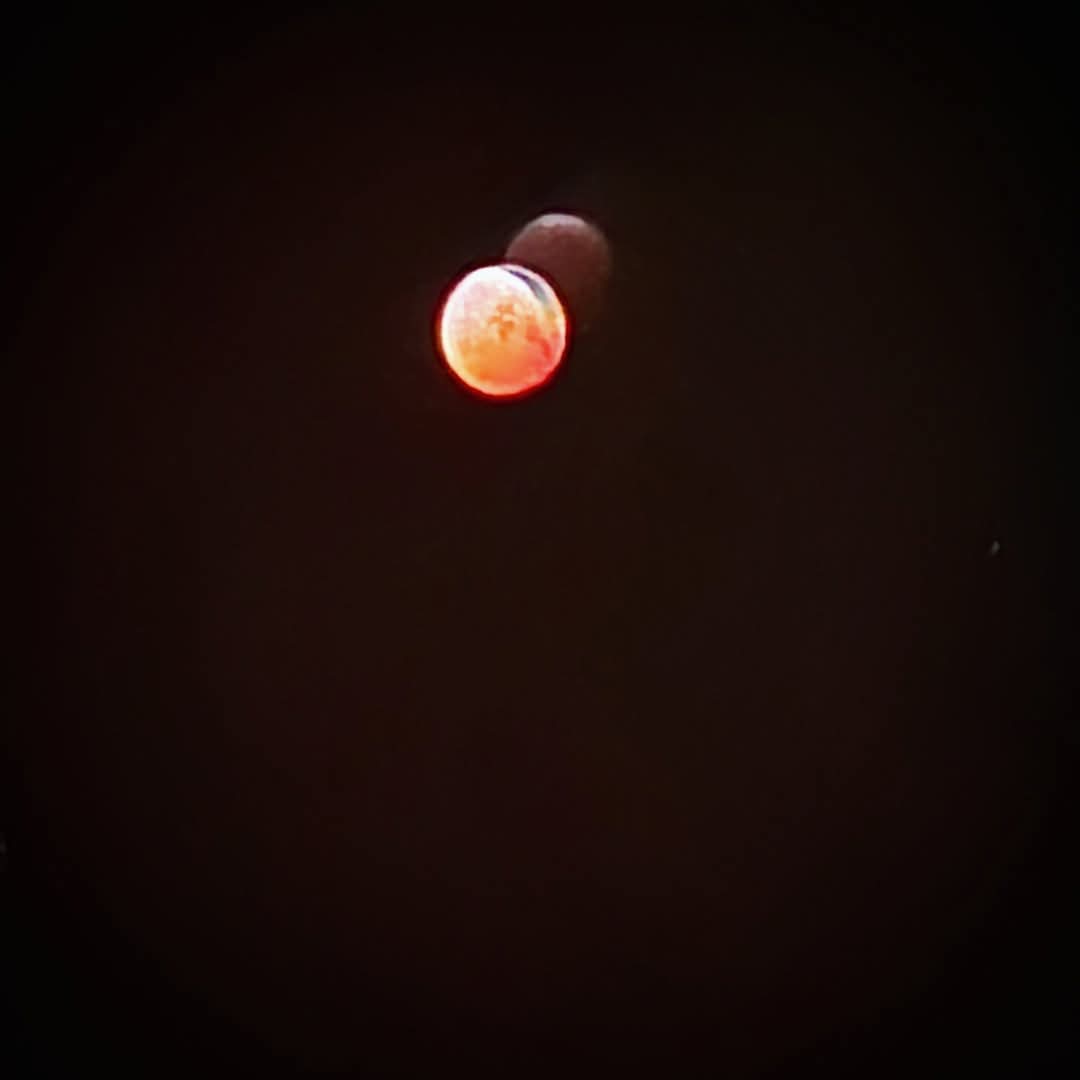
That uneasy feeling had one benefit, though: I was awake to witness the blood-red moon eclipse.
What made it special wasn’t just the eclipse itself, but the slow-motion dance of the Earth’s shadow creeping across the moon, transforming it into that eerie red glow. It wasn’t just the moon that took on the color—it was the whole sky, bathed in a deep crimson hue. More than anything, that aura gave the night an apocalyptic vibe.
I’ve seen plenty of photographs today, but none of them truly do it justice. Pictures can capture an image, but seeing it with your own eyes? That’s where the magic is.
What made this event even rarer for Eastern Pennsylvania was the clear sky. No clouds, no rain, no storms, no snow—just crisp air with an early spring feel. It seems like every celestial event in recent memory has been obscured by bad weather, but not this time. This time, the dreadful, dark, blood-red moon hung over us, a stark reminder of space and science—or, depending on your beliefs, a sign of Armageddon and biblical prophecy.
But let’s ignore the biblical prophecies for now—after all, we’re still here. And as far as I can tell, nobody was raptured.
NASA officials now report a 2.3% chance of an asteroid striking Earth in 2032, up from 1.9% yesterday.
This equates to a 1 in 43 chance of impact, with a 97.7% likelihood that the asteroid will miss. The asteroid is estimated to be between 130 and 330 feet in diameter…
So …there’s that now.
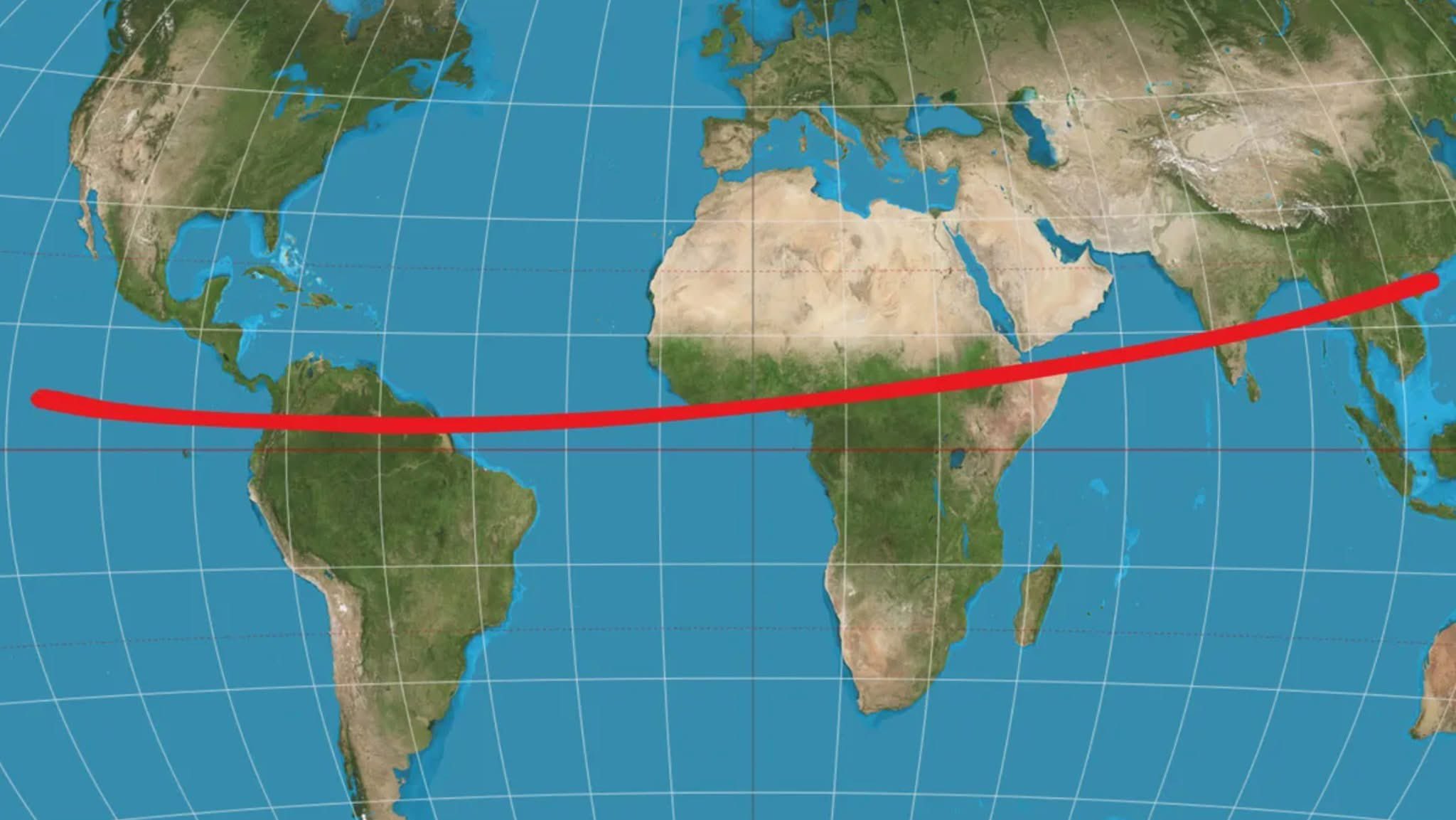
A 196-foot-wide asteroid has a 1-in-83 chance of striking Earth in 2032. Experts just released a map of where it could impact our planet. A newly discovered asteroid named 2024 YR4 is currently 27 million miles away. According to NASA’s Center of NEO Studies, it has about a 1-in-43 chance of hitting Earth during its closest approach to the planet, which will occur on Dec. 22, 2032.
Catalina Sky Survey engineer and asteroid hunter David Rankin wrote on BlueSky, “This is one of the highest probabilities of an impact from a significantly sized rock ever.” Scientists say that the “risk corridor” for impact currently runs from South America and across the Atlantic to sub-Saharan Africa.
That said, experts note that uncertainty is still high, and more observations are needed to confirm the projections. They also add that additional data will likely decrease the odds of the asteroid hitting Earth.
However, a team of international researchers at the institution have published new findings expanding on his planetary discovery in Astronomy & Astrophysics.
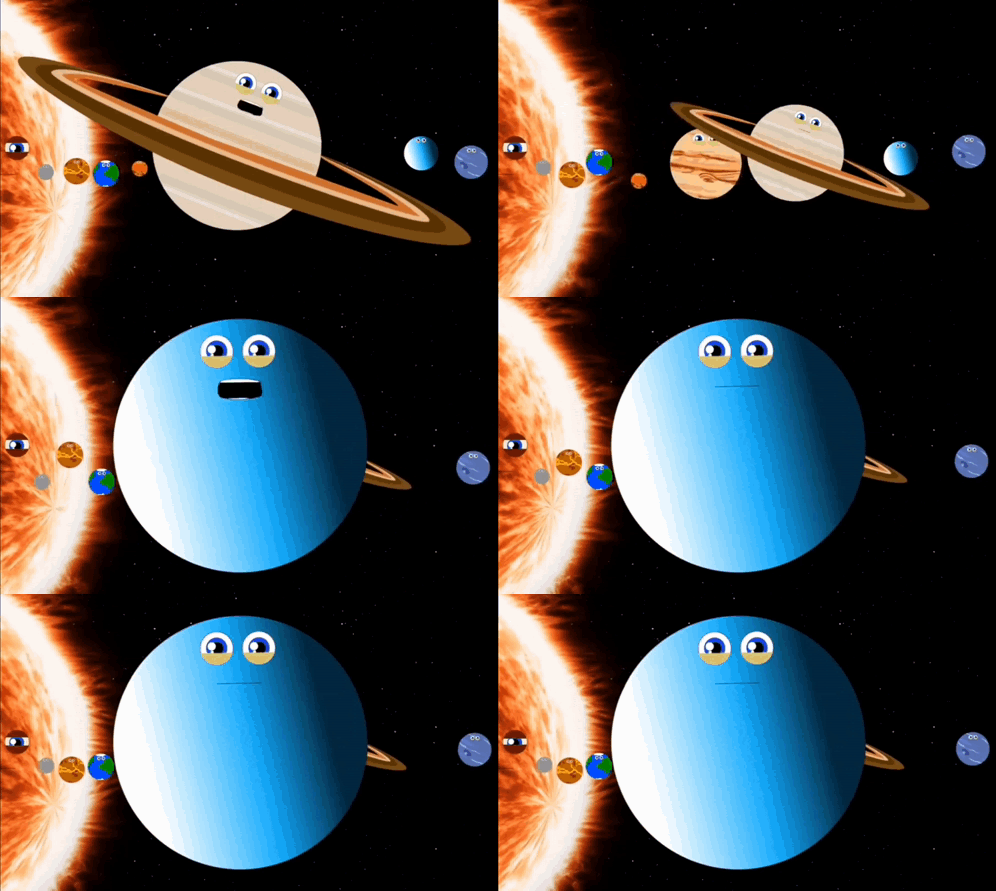
Now what should it be named.. HD 20794 just doesn’t have a ring. Since Uranus is taken why not Myanus ..
It doesn’t solve a mystery but potentially creates a new one.. or ones..
One of the fast radio bursts appears to have come from the chaotic, magnetically active environment near a type of dense neutron star called a magnetar. Meanwhile, the other fast radio burst, which scientists observed pulsating over the course of several months, came from the outskirts of a distant dead, star-starved galaxy.
Researchers utilized a fast radio burst-hunting machine called CHIME, or the Canadian Hydrogen Intensity Mapping Experiment radio telescope, to uncover both bursts. The instrument has enabled the detection of thousands of FRBs since 2020.
Sunday has been an active day for solar flares and sun activity.. at the time of this post there were at least ten flares surpassing the M2.0 threshold so far. Among them was an impressive X1.1 flare that occurred early this morning, setting the tone for a dramatic increase in activity compared to the day before.
According to the latest NOAA/SWPC update, there’s an 80% chance of more M-class flares throughout the day and a 30% chance of another powerful X-class flare.
It appears new years fireworks may be possible from our star..
As we head to the end of another year, and review some old CIA records on remote viewing of Mars, let’s set an agenda item as a resolution: Let’s return back home!
A declassified document reveals the CIA secretly used astral projection/remote viewing in 1984 to visit Mars … … 1 million years in the past. This experiment was conducted under the Stargate Project, a secret Army team tasked with investigating ‘psychic phenomena’—primarily remote viewing—and their potential military/intelligence applications.
In January 2017, a CIA document from 1984 titled ‘Mars Exploration’ under this program was declassified. The subject who undertook this ‘exploration’ was given a sealed envelope with a card inside that read: “The planet Mars. Time of interest approximately 1 million years B.C.”
From the report, it gets interesting..
The experiment began at 10:09 AM on May 22, 1984. First, the subject reported an “oblique view of a pyramid … sitting in a … large depressed area.” He reported “severe, severe clouds, more like dust storms.” “I’m looking at [an] after effect of a major geologic problem.” The moderator begins to give the subject a series of coordinates to travel to.
The subject reported seeing a “perception of a shadow of people, very tall … thin.”
“It’s as if they were there and they’re not, not there anymore.” The Martians were reportedly “very large” and “wearing some kind of strange clothes.” The moderator then asks the subject to turn his focus to a new location in the same time—just before the “major geologic problem.”
The subject reports looking “up the sides of a steep wall that seems to go on forever.” “It’s like the wall of the canyon itself has been carved.”
The moderator replied to the subject’s descriptions: “Yes that would be correct.”
20 minutes into the exploration, the subject arrived at a new place with a “very large” marker resembling the Washington Monument, or an “obelisk.” Jumping to another new place, the subject reported a “huge circular basin” surrounded by “very ragged, ragged mountains, very tall.”
The subject makes mention of “a radiating pattern of some kind.” “It’s like some really … strange intersecting kind of roads that are dug into valleys.” “They’re like real neat channels cut, they’re very deep, it’s like the road went down.”
35 minutes in, the subject suddenly said the pyramids were “like shelters from storms,” and he seemed confident that “they’re designed for that.” Inside, the pyramid was reportedly “stripped of any kind of … furnishings.” “It’s like a … strictly functional place for sleeping, or—that’s not a good word—hibernations, some form … I get real raw inputs, storms, savage storm, and sleeping through storms.”
The subject was able to approach Martians and ask questions.. “They’re ancient people. They’re … dying, it’s past their time or age.” “They’re very philosophic about it. They’re looking for … a way to survive and they just can’t.”
They were reportedly “hanging on” while waiting for a group of them that had left some timo ago to find a “new place to live.”
The moderator then asked the subject to find out how “the others” had left. The subject reported that it “looks like the inside of a larger boat. Very rounded walls and shiny metal.” Then, the moderator asked him to “go along with them on their journey.” The subject reported an impression of a “really crazy place with volcanos and gas pockets and strange plants.” He described it as a “very volatile place … very much like going from the frying pan into the fire.” But the difference from Mars, he said, was that “there seems to be a lot of vegetation where the other place did not have it. And different kind of storm.”
More..
JOE McMONEAGLE THE REMOTE VIEWER – Joe McMoneagle is the remote viewer who remote viewed Mars when he was tasked by a classified program. The recent Daily Mail’s CIA article about Mars having Pyramids that were built by Ancient giant Martians (1 Million BC) was from his accounts.
🚨 JOE McMONEAGLE THE REMOTE VIEWER – Joe McMoneagle is the remote viewer who remote viewed Mars when he was tasked by a classified program.
The recent Daily Mail's CIA article about Mars having Pyramids that were built by Ancient giant Martians (1 Million BC) was from his… pic.twitter.com/co1JJpnUJ3
The asteroid, designated COWECP5, is forecasted to streak through the sky over Eastern Siberia at 11:14am ET.
Scientists say the small space rock, measuring 27 inches in diameter, is expected to burn up in the atmosphere and poses no threat to humans on the ground.