Every year, when you sort through your children’s Halloween candy, you’re doing it for two reasons.
First, probably to steal the best ones before they notice. But second, because you’ve heard the stories: knives in apples, poisoned chocolate bars, and cyanide-laced sweets handed out by strangers.
Guess what? Here is the tough news to consider…
It’s not really true and there may be no real logical requirement to keep doing this.. (though we all still will )
There is some history on the origin for this candy fear..
The first report of Halloween treats being tampered with in North America was in 1959. That year, a California dentist named William Shyne distributed 450 laxative-laced candies to children — 30 of whom fell ill. He was later charged with “outrage of public decency” and “unlawful dispensing of drugs.”
Another high profile case made headlines in 1964, when a 47-year-old mother from Greenlawn, N.Y., named Helen Pfeil handed out bags of treats containing arsenic-laced ant traps, metal mesh scrubbing pads and dog biscuits.
And just a few years ago in Pennsylvania, cops warned parents to check their kids stash for THC-laced Nerd ropes..
But the real fear began with one man, in Texas, nearly fifty years ago.

The night he came home
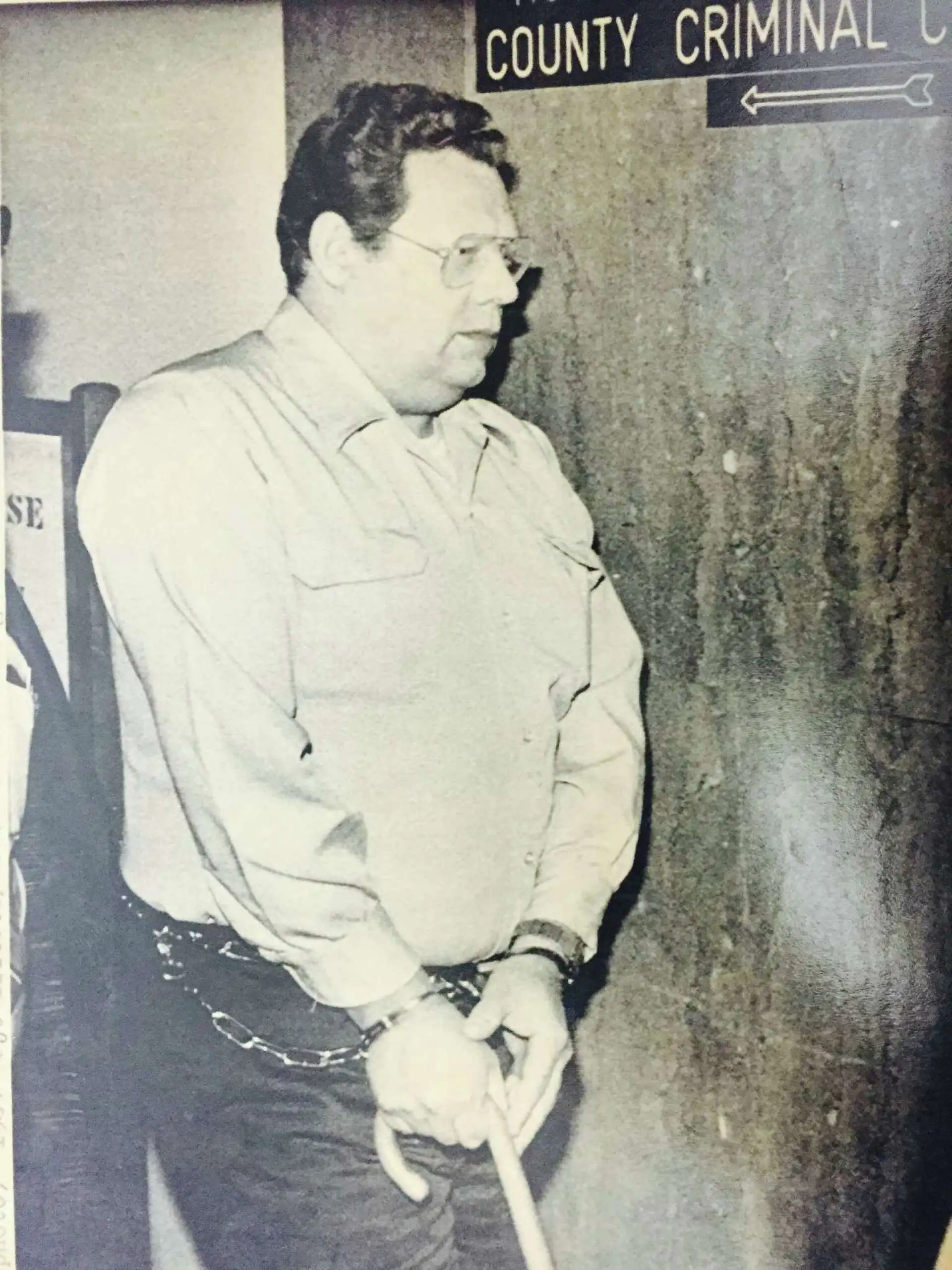
On Halloween night 1974, a father named Ronald Clark O’Bryan, later called “The Candyman” by major media that loves naming killers for pop culture and sales purposes, laced powdered candy with cyanide. He was also called the The Pixy Stix Killer but that name didn’t seem to stick …
O’Bryan didn’t lace candy to poison his neighborhood in Pasadena, Texas. He did it to kill his own 8-year-old son, Timothy, for life-insurance money.
That is the horrid truth behind this urban legend.. It was real in a sense, but it was disgustingly personal for O’Bryan.
O’Bryan, a 30-year-old optician from nearby Deer Park, joined his children and neighbors for trick-or-treating. One house was dark; no one answered the door, so the kids moved on. O’Bryan lagged behind for show, then caught up holding five giant Pixy Stix, about 21 inches long, sealed with staples. They were tampered with– by him.
He explained to the children they were lucky: The “rich neighbors” were handing out expensive treats. Each child got one. Later, he gave one to his five-year-old daughter and another to a ten-year-old boy from his church.
That night, Timothy ate a few spoonfuls of the powdered candy, complained it tasted bitter, and collapsed. Within minutes he was dead.. he was poisoned by his own father.
The Investigation
O’Bryan claimed a mysterious neighbor had handed him the candy. But the man he blamed, Courtney Melvin, was at work as an air-traffic controller on duty that night and he had more than 200 coworkers confirming his alibi to law enforcement.
Detectives soon learned O’Bryan’s life was a complete train wreck. He was more than $100,000 in debt, behind on his mortgage and car payments, suspected of theft at work, and had held 21 jobs in 10 years. In the months before Halloween, he quietly took out life-insurance policies totaling up to $60,000 to $100,000 on his children!

At trial, witnesses testified that O’Bryan had asked about buying cyanide and even discussed lethal doses. His sister-in-law told the court that at Timothy’s funeral, he spoke excitedly about collecting insurance money and taking a vacation.
Prosecutor Mike Hinton told jurors: that the only inescapable conclusion you can draw is that this man killed his own child for money.
The case seemed as air tight as people can desire.
It took the jury 46 minutes to find O’Bryan guilty.
The Candyman’s Final Trick
O’Bryan maintained his innocence for nearly a decade. On March 31, 1984, he was executed by lethal injection. His final meal: steak, French fries, peas, corn, salad, rolls, iced tea, and for desert a Boston cream pie.
Outside the prison, protesters wearing Halloween masks chanted “Trick or Treat!”

It was both macabre theater and a grim bookend to the legend he had created.
The root of fear
O’Bryan’s crime transformed Halloween. Parents no longer saw candy as harmless; they saw potential danger. In the years that followed, rumors spread nationwide .. tainted treats, razor blades in apples, needles in chocolate bars.
By the 1980s, police and hospitals offered X-ray screenings for candy. Families examined every wrapper under bright kitchen lights.


To this day, continued stories occur each Halloween season in which people report tampering of candy to cops.. such as this from 2015 in Kennett Square PA, when parents complained to police about needles in treats.. which turned out to be a hoax.
The Legacy
The Candyman’s story became the template for America’s Halloween anxiety. It was a true crime that birthed a thousand false ones..
Every October, parents still dump candy onto the dining-room table, sifting through it like forensic scientists. It’s ritual now, a strange inheritance from 1970s.
Because even though the candy isn’t poisoned, the fear still is there..
According to Professor Joel Best, there have been approximately 80 reports of sharp objects inserted into Halloween treats since 1959. The great majority of those reports turned out to be hoaxes
Don’t feel guilty about checking the candy.. you know, just in case.
And while you’re looking through, maybe just throw away those candy corns that ruin teeth and don’t taste good anyway.