There’s a strange little story unfolding right now that says a lot more about us than it does about any single book.
A controversial French novel, The Camp of the Saints by Jean Raspail, recently made its way back into the spotlight with an English edition. The book itself has always been divisive, centered around an invasion of migrants and the collapse of Western society. It’s not new. It’s not unknown. But suddenly, it was gone.
Amazon pulled it.
Then… just as quietly… it came back after a backlash.. . Some people believe the ban was needed.. other decried it .. It is not the first time that Amazon has pulled a book, just this time it was more noticeable..
The Books That Keep Getting Pulled
We’re living in a strange time where books—some old, some new, some classics, some uncomfortable—are constantly being challenged, removed, or avoided altogether.
Here are some of the titles that have been repeatedly banned or challenged in recent years with a bit of a reason why:
1984 – political themes, control, surveillance
The Catcher in the Rye – language, rebellion, teenage angst
Adventures of Huckleberry Finn – racial language and historical context
The Perks of Being a Wallflower – trauma, sexuality, mental health
Looking for Alaska – grief, identity, coming of age
Gender Queer: A Memoir – gender identity and sexuality
A Clockwork Orange – violence and disturbing themes
Crank – drug use and addiction
Forever… – teenage sexuality
It – violence, horror, and controversial scenes involving children
Some of these books are decades old. Some of them were required reading not that long ago. And now, they’re showing up on lists of things that maybe students shouldn’t see.
So… Who Is Actually Pushing This?
On one side, you have organizations like PEN America and the American Library Association, actively tracking book bans and pushing back against them. Their argument is pretty simple: access to ideas matters, even the uncomfortable ones.
On the other side, you have groups like Moms for Liberty and Parents’ Rights in Education, who are advocating for removing certain materials from schools, especially when they involve sexuality, race, or themes they believe are inappropriate for kids.
And here’s the thing… most of these bans aren’t happening at some massive federal level but instead they’re happening quietly.
School boards. District decisions and local meetings. Small votes that end up having a huge impact.
In a lot of ways, this isn’t “top-down censorship.”
It’s something closer to self-censorship… happening piece by piece.
So book banning could be true deep mistake..
Not because every book is good or because every idea deserves to be celebrated. Some ideas are uncomfortable. Some are outdated. Some are even offensive by today’s standards.
But they existed and they were written, read, and a part of conversations at one point in time.
And books… especially when you’re young… are a window to the world–the world could bright and happy or dark and dreary.
They introduce you to ideas you’ve never thought about. Situations you’ve never experienced. Perspectives you might never encounter otherwise.
I remember reading books in school that pushed boundaries. That made people uncomfortable. That sparked real conversations. And those conversations? They were good. They were controlled. They were thoughtful. There wasn’t hatred in the room.
Kids aren’t born hateful.
If anything, school is supposed to be the place where you learn how to think, not what to avoid.
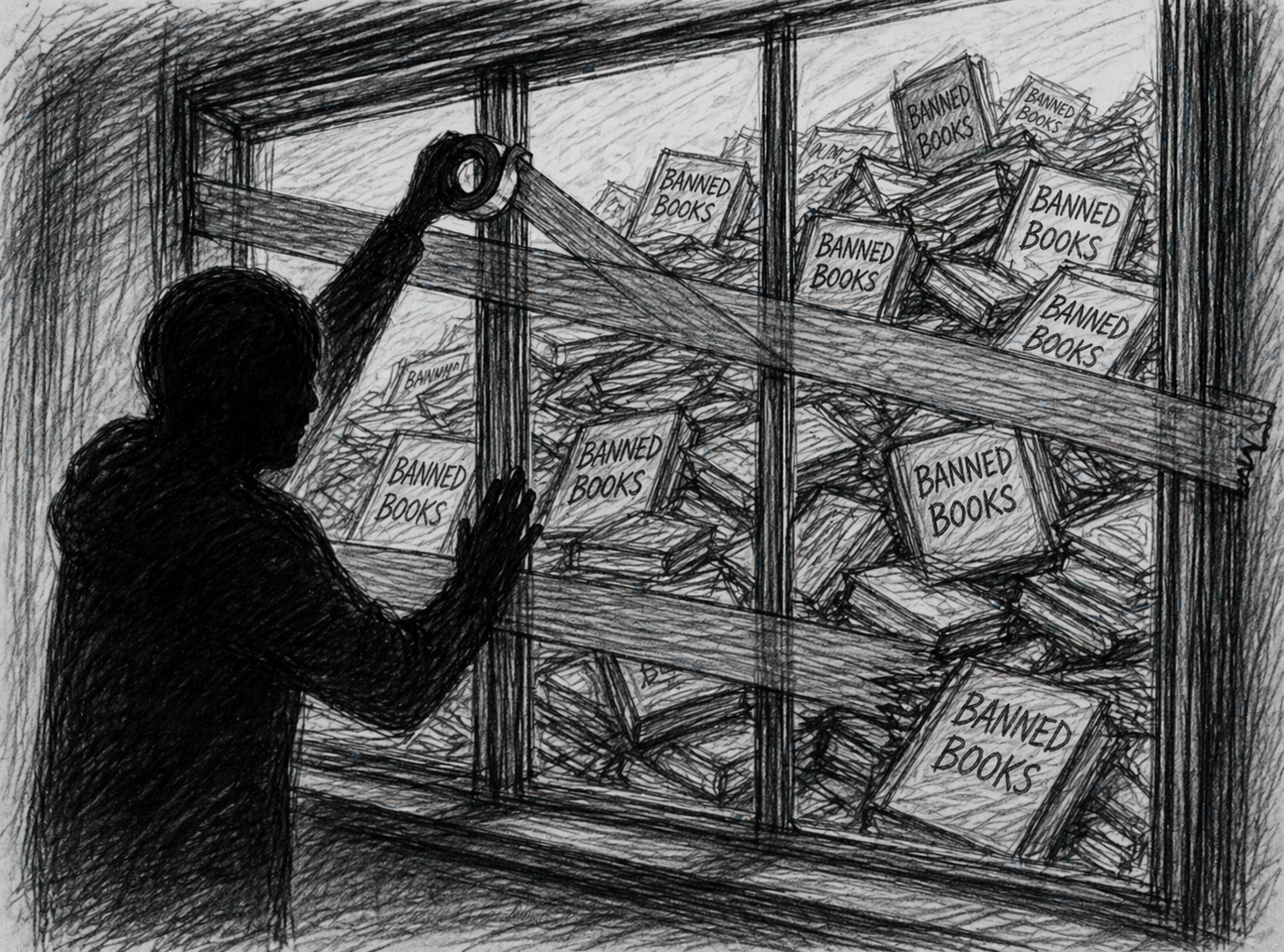
But now it feels like we’re taking that window… and instead of opening it wider…we’re shutting it, locking it, and then duct taping the edges just to make sure nothing gets through.
Maybe That Discomfort Matters
Maybe the point isn’t to agree with every book.
Maybe the point is to wrestle with them.
To question them. To push back. To understand why something was written the way it was—and whether it still holds up today.
Because once you start removing everything that makes people uncomfortable…
you don’t just lose the bad ideas.
You lose the conversation entirely.
And that might be the most dangerous part of all.