Is the Cat in the Hat Really the New Viral School Scare?
Apparently, a new viral trend has arrived just in time for the beginning of the school year — or, at least, we are being told that one has arrived.
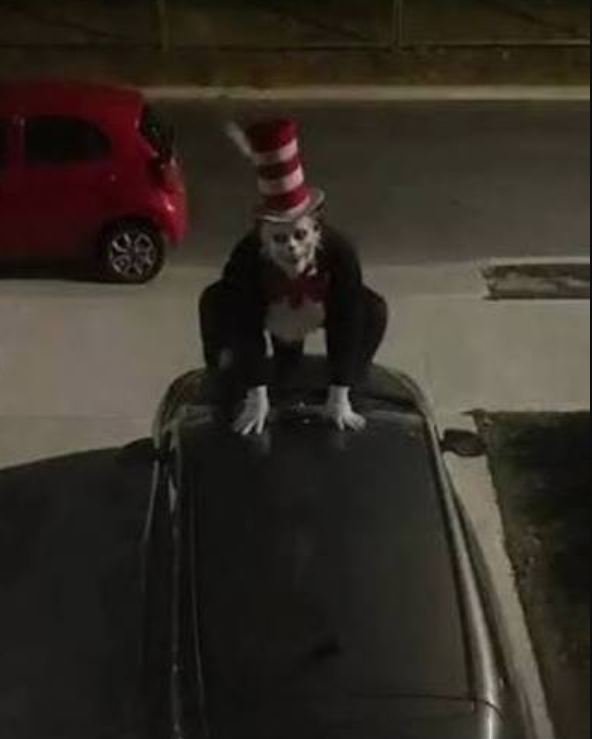
Across the country, local news reports have begun appearing about disturbing videos featuring the Cat in the Hat. Yes, the Dr. Seuss character.
In these videos, a much more sinister version of the Cat is being depicted outside or near schools, where threatening messages are being delivered and questions are being asked about who his “next victim” might be. The videos are reportedly being created with artificial intelligence, presumably by students or other social media users, and are then being shared online.
And with that, a “viral trend” has been declared.
But is it actually viral?
That may be the more interesting part of this story.
Similar reports are being aired by local television stations around the country, with remarkably similar warnings being given. As more coverage is produced, more parents and students are being introduced to something they may never have encountered otherwise.
It raises an interesting question: Is a viral trend being reported, or is a viral trend being created by the reporting of it?
We’ve been here before.
The Momo Challenge was once treated as a major threat to children. Warnings were issued, school officials became involved, assemblies were held, and parents were terrified. Eventually, serious questions were raised about whether the supposed challenge had ever existed on anything close to the scale being suggested.
Then there were the creepy clown sightings of 2016, when reports were repeated so frequently that additional sightings, pranks and copycats were inevitably encouraged.
Now, in 2026, something new has been added to the equation: AI.
A familiar children’s character can be transformed into something frightening in seconds. A particular school can be mentioned. A threatening scenario can be manufactured. The finished product can then be dropped onto social media and presented as though something much larger is happening.
Maybe the evil Cat in the Hat really is the newest fad sweeping through schools.
But perhaps something else is being demonstrated.
A few videos can be created. Those videos can be noticed by local media. A “nationwide trend” can be announced. Millions of parents and students can then be told about it including countless kids who had never heard of it before.
And by tomorrow, some of those kids may decide to make their own.
At that point, was the viral trend discovered by the media .. or was it helped into existence by the coverage?
The school year has barely begun, and already the Cat in the Hat has apparently been given his turn as the newest internet boogeyman.