US blasted Russia for ‘dangerous and irresponsible behavior’ after Russians conducted anti-satellite weapons test, endangering International Space Station
US investigating a ‘debris-generating event in space’ after astronauts on the ISS were forced to prepare for a possible evacuation
It came amid unconfirmed reports that Russia performed an anti-satellite weapon testThe space junk passes started early Monday, with the ISS making closes passes every 90 minutes
The tests have been criticized by the space community because of the risk they create for crews in low Earth orbit
NASA has not yet commented, but its Russian counterpart Roscomos, downplayed the incident
Tensions between Russia and the West have escalated in recent weeks as Kremlin has been accused of fomenting instability on Belarus-Poland border
American officials have also grown alarmed over satellite images said to show a buildup of Russian military personnel along its frontier with Ukraine
— Read on www.dailymail.co.uk/news/article-10204525/Space-debris-event-forces-ISS-crew-evasive-action.html
Category: space
-

ISS crew takes refuge after Russian anti-satellite weapons test sends debris flying
-
A fireball raced across the Midwest sky, except it ‘was not a natural fireball,’ group says
Play Video
Fireball caught on home security camera turns Colorado night sky blue
An object described by news outlets and witnesses as a “mysterious fireball” briefly shot across the sky early Wednesday, raising widespread speculation about what it might have been.Residents – and experts – throughout the Midwest are weighing in with speculation.
Reports of unidentified flying objects are hardly new, although some seem to be ranking what looks like a blazing ball shooting across the sky particularly high on the highly-scientific awesome scale.
— Read on www.msn.com/en-us/news/us/a-fireball-raced-across-the-midwest-sky-except-it-was-not-a-natural-fireball-group-says/ar-AAPL7D2It seems to be that time of year when the sky begins to fall! We have already been warned of several astroids nearing close to earth within the next few weeks. This one, well, is “natural” according to some..
-
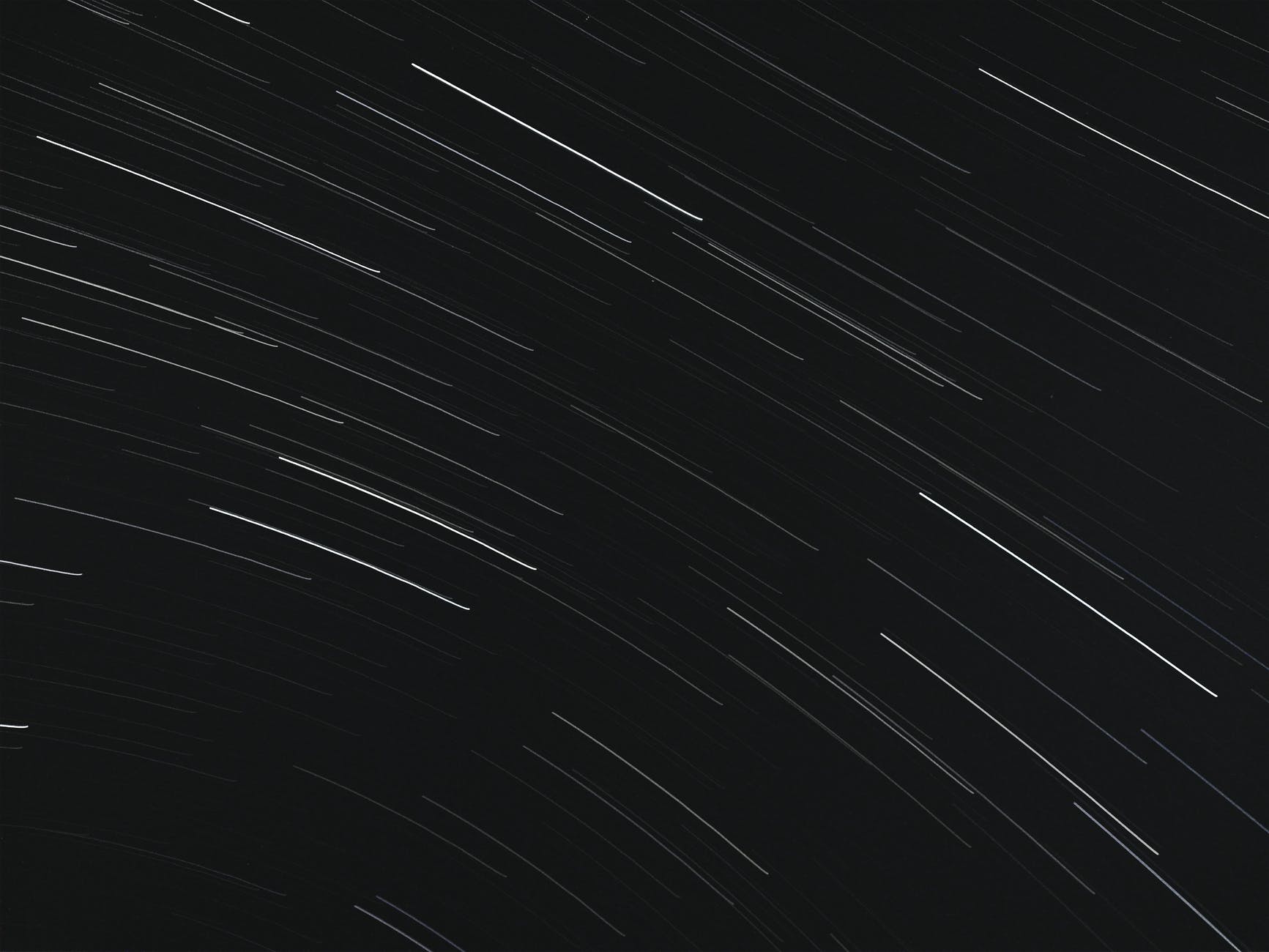
Earth has yet another phew moment
Named 2021 SG, an asteroid flew close to the planet on September 16, but because it came from the direction of the Sun, scientists didn’t see it coming…
Think about that.. Where were you on September 16 when you had no idea this was occurring?
According to the NASA-backed International Astronomical Union’s Minor Planet Center, the asteroid has a diameter of anywhere between 42-94 meters, with an average diameter of 68 meters.
This size is around the wingspan of a 747, and is also around the height of the Cinderella Castle in Disney World and around half the size of the Great Pyramid of Giza.
Because of the way the asteroid arrived, it was not noticed until it passed by the next day…
Another close call… that no one would have seen coming.
-
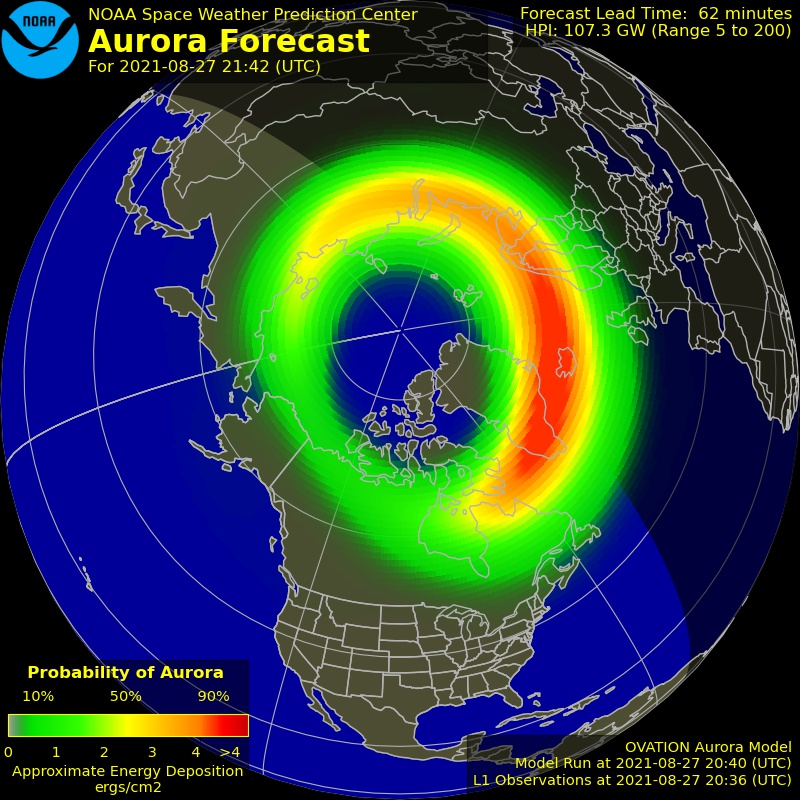
‘Solar tsunami’ set for August 30
As though the weather on the planet wasn’t already scary enough, cue the sun: a C3 flare erupted from sunspot region 2859 on the Sun on August 26 and appears to have sent a solar blast towards the Earth..
The National Weather Service’s Space Weather Prediction Center confirmed a partial halo CME took place. In a statement released by the SWPC, analysis and modeling are now underway to determine if there may be any possible geoeffective component to this CME.
It appears this solar explosion set-off a “solar tsunami”.
A solar tsunami, also known as a Moreton Wave or a Moreton-Ramsey Wave, is the signature of a large-scale solar corona shock wave generated by solar flares. Initially spotted in the late 1950’s, technology deployed by NASA in 2009 confirmed the presence and the mechanics of such a tsunami…
Some have said the best “Northern Lights” of the century are coming! The best guess for the potential impact of the “Solar Tsunami” will be August 30 ..
-
NASA’s new space suits are delayed, making a 2024 Moon landing ‘not feasible’
An audit from the agency’s Office of Inspector General said NASA is on track to spend more than $1 billion on space suit development by the time its first two suits are ready, which would be “April 2025 at the earliest,” the report said. “Given these anticipated delays in spacesuit development, a lunar landing in late 2024 as NASA currently plans is not feasible.”
NASA is trying to return astronauts to the surface of the Moon for the first time since 1972 under its Artemis program that was spawned by the Trump administration in 2019. The program, as set by former Vice President Mike Pence, called for a crewed lunar landing in 2024 — a deadline that President Biden’s transition team deemed unrealistic. But NASA continues to embrace the date, with administrator Bill Nelson insinuating delays are likely because “space is hard.”
— Read on www.theverge.com/2021/8/10/22618275/nasa-spacesuits-delay-inspector-general-report-2024-artemisWait wait wait… this comes decades upon decades after the 1969 moon landing? After a suave suit made many moons, presidents, and popes ago kept our astronauts safe in space ?
The technology has been long lost, we guess ..
-
THE PERSISTENT HUM BEYOND OUR SOLAR SYSTEM
NASA’s Voyager 1 is now floating beyond our solar system. It left these here parts about 10 years back now..
And since then, an intriguing event has been constantly beamed back to the earthlings fascinated by his venture into the deep dark unknown universe..A hum.
“We’re detecting the faint, persistent hum of interstellar gas,” said Stella Koch Ocker, a doctoral student at Cornell University who lead the research. “It’s very faint and monotone, because it is in a narrow frequency bandwidth.” For almost one billion miles, Voyager 1 could hear the monotone drone and the researchers believe these weak plasma waves are distinct from other detections made in the vast nothingness of interstellar space. For instance, sometimes the sun gets cranky and erupts, spitting particles out into space. The outbursts have a characteristic signature that James Cordes, an astronomer at Cornell, likens to a lightning burst. Those bursts were once used to determine the density of interstellar plasma, but this low, constant hum shows Voyager is collecting plenty of information without the solar outbursts. “Now we know we don’t need a fortuitous event related to the sun to measure interstellar plasma,” said Shami Chatterjee, a research scientist at Cornell and co-author on the paper.
It is so cool to think that Voyager 1 has been traveling since 1977. And this idea, this notion, that we don’t know what that weird hum is? Well that is awfully cool, too.
Sadly it may be a mystery so many alive today won’t be alive when we find out more information..
There will be another NASA mission set for the 2030s. Maybe. http://interstellarprobe.jhuapl.edu/ Perhaps that mission can start to put the puzzle together..
x x x
The long history
Back in 1977, this is how the UPI reported the launch of this historic mission:

The fact it is still rolling through the outer limits of our imagine is just amazing. Yes we had a helicopter on Mars this year. But this craft launched in the Carter administration is still alive and well, feeling its way through the darkness to locate the hum of new existence.
x x x
“It’s very faint and monotone, because it is in a narrow frequency bandwidth,” says Stella Koch Ocker, a doctoral student in astronomy at Cornell and lead author on the paper. “We’re detecting the faint, persistent hum of interstellar gas.”
Ocker adds that this means the interstellar gas might be more active than scientists previously thought, as the gentle plasma hum Voyager 1 hears is fairly consistant behind bigger signals.
“The interstellar medium is like a quiet or gentle rain,” says senior author James Cordes, professor of astronomy at Cornell. “In the case of a solar outburst, it’s like detecting a lightning burst in a thunderstorm and then it’s back to a gentle rain.”
-
The rockets red glare comes down somewhere in the Indian Ocean
The Chinese rocket, out of control and in a collision course with the crust of the planet, has crashed.
Most likely somewhere in the Indian Ocean..
The chances were always great that the ocean would swallow up the debris.. but for a few hours tonight it got dicey as the rocket passed over several nations and island states..
Meanwhile this is a developing story..
You can sleep easy tonight.
-
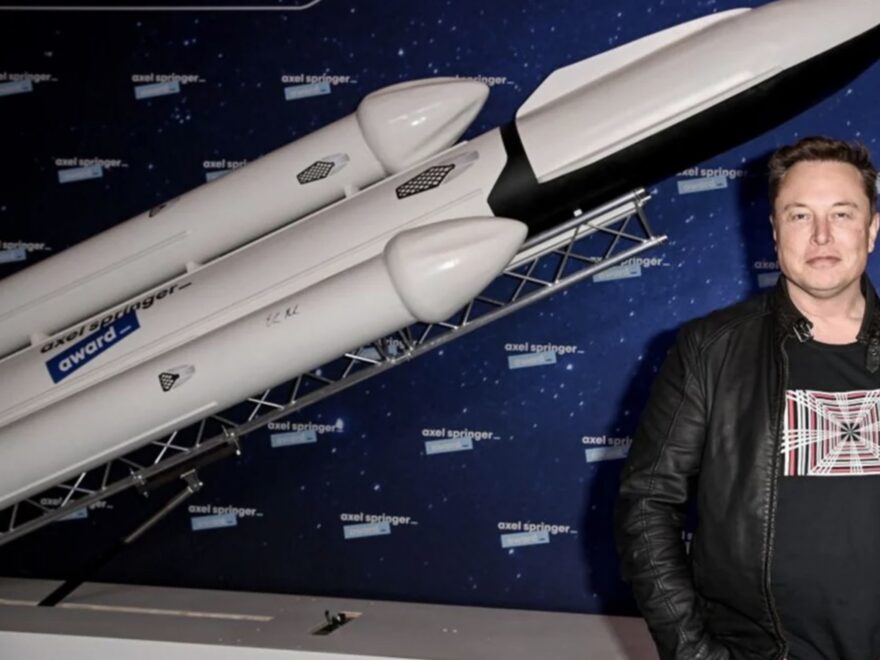
Musk the Martian
There has been brewing controversy about this weekend’s SATURDAY NIGHT LIVE for several weeks..
No, not because of musical guest Miley Cyrus. Controversy about her is very 2008.. very 2000 and late. Instead it stems from the decision to have Elon Musk as a host.
It may be his vaccine commentary.. perhaps other Tweets that have stoked the wokes.. But either way, the cast isn’t too happy ..
While some may argue the cast should be more upset at this season’s writing, the appearance of Musk has produced outrage across the socials and among the internals at Peacock.. but the show will go on. Despite the anger over his appearance, no doubt it may end up being one of the highest rated shows of the season for Lorne Michaels.
All that aside, something else of strange interest has been introduced into the discussion..
Call it coincidence. Or maybe call it some zany proof of time travel!
It all stems from a British media report that went viral from the UK SUN (God bless the sploid)..

Writing in his 1952 science fiction novel “Project Mars”, engineer Wernher von Braun described a man called “Elon” who ruled over the Red Planet.
One passage of the book – a fantasy blueprint for a human expedition to Mars – details that “a Martian government was created, led by ten men”.
Those men worked under a leader “elected by universal suffrage for five years under the name or title of Elon.”

x x x
This book’s existence has been talked about for a few years. But now and then social media picks it up. Or mainstream reports.. or sites like ours.
And each time eyes roll .. or eyebrows raise.
This time, as we get closer to a future where Martian will be invaded by Earthlings, we presume at least, it’s fun to think of King Elon going to the red planet with his ten men. The gild..
-
And the rocket’s red glare
The forecast for when the out-of-control rocket from China will re-enter the Earth’s atmosphere is around 7:13pm ET tomorrow, although U.S. Space Force says it could happen +/- 18 hours from then due to the out-of-control nature of the rocket.
The Pentagon has said they have -no- plan to attempt to shoot it down, even if it looks like it’ll hit the United States. For now, their plan is one of “hope”.
Developing..
-
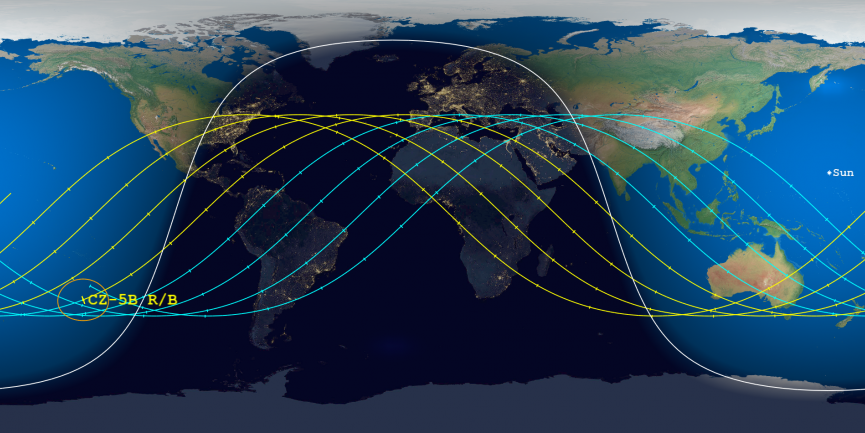
2021 gets wild!! Where will the Chinese Rocket fall!?
Here is what we know: An out-of-control spent rocket originally launched by China on April 29 is racing back towards Earth and what’s left of it is expected to impact Earth on May 10.
Here is what we do not know: Where it will hit.
Forecasts show if an impact were to occur in the United States, the eastern U.S. would have the highest odds of seeing impact. Chicago, Buffalo, New York City, Boston, Philadelphia, Dover, Atlantic City, Richmond, Gainesville, and Jacksonville are among the eastern U.S. cities the rocket is expected to pass over and perhaps crash into..
World governments are watching closely.
BUT… with re-entry speeds of over 15,000 mph, it may be too late to warn people of the impending impact zone when someone actually knows where it will strike…
Developing soon…..sooner rather than later.

